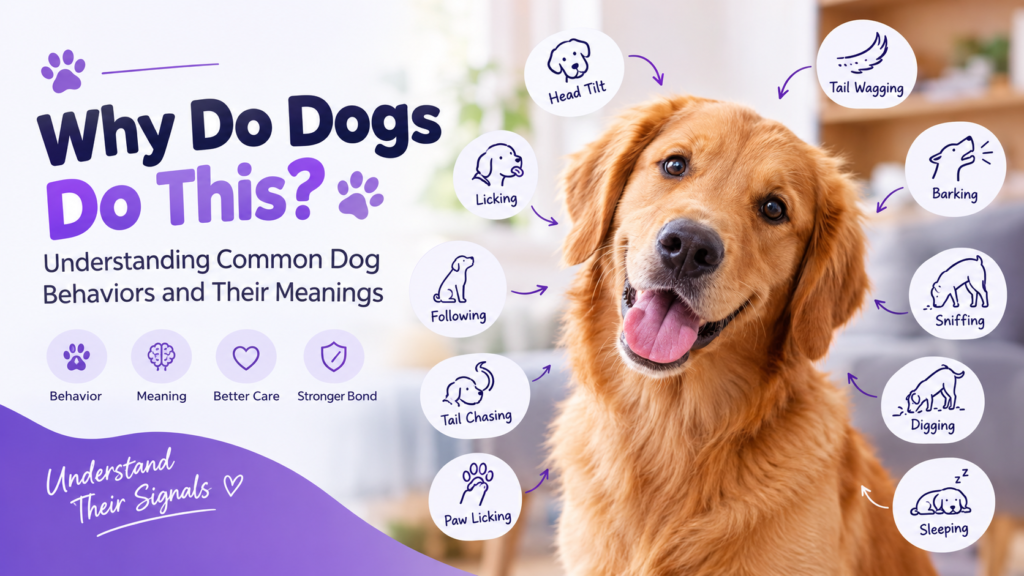
Dogs are wonderful companions, but their behavior can sometimes leave their owners confused. Why does a dog tilt its head when someone speaks? Why do dogs lick people, chase their tails, bark at strangers, or suddenly run around the house? These actions may look funny, unusual, or even concerning, but many have natural explanations.
Dogs communicate through body language, sounds, movement, scent, and everyday habits. Because they cannot explain their feelings with words, understanding their behavior requires observing what they do and considering the situation around them.
This guide explores why dogs display common behaviors, what those actions may mean, and how owners can respond appropriately. Whether you have a playful puppy or an older dog, learning these signals can help you build a stronger relationship with your pet.
Why Do Dogs Do Strange Things?
Dogs do not always behave in ways that make sense to humans. Some actions come from natural instincts, while others develop through learning, emotions, daily routines, or interactions with people and animals.
For example, a dog might dig in the garden because digging is instinctive, while another may scratch at the door because it has learned that this action gets its owner’s attention. A dog may also behave differently when it feels excited, frightened, bored, or uncomfortable.
According to the Merck Veterinary Manual, dogs communicate through body posture, facial expressions, ear and tail positions, vocalizations, scent, and physical contact. Understanding these signals helps owners recognize what their pets may be experiencing.
The important thing to remember is that one behavior does not always have one meaning. A wagging tail, for example, does not automatically mean a dog is happy. The surrounding circumstances and the dog’s overall body language matter.
Why Do Dogs Wag Their Tails?
Tail wagging is one of the most recognizable dog behaviors. Many people associate it with happiness, especially when a dog greets its owner after a long day.
Although tail wagging often accompanies excitement and friendly interactions, it can also indicate nervousness, frustration, alertness, or other forms of emotional arousal.
A relaxed dog may wag its tail loosely while moving its whole body. In contrast, a dog that holds its tail high and stiff while staring at another animal may be feeling tense or highly alert.
The position, speed, and movement of the tail should be considered alongside the dog’s ears, eyes, facial expressions, and posture.
What should you do? Observe your dog’s entire body rather than relying on tail movement alone. If the dog appears relaxed and approaches willingly, friendly interaction may be appropriate. If it becomes stiff, growls, or tries to move away, give it space.
Why Do Dogs Lick People?
Dogs frequently lick their owners’ hands, faces, or feet. This behavior can have several explanations, including social interaction, attention-seeking, exploration, and learned habits.
Puppies experience licking during early social interactions, and adult dogs may continue using it as a way to interact with familiar people. Some dogs also discover that licking gets them attention, so they repeat the behavior whenever they want affection or engagement.
Dogs explore their surroundings through smell and taste. Human skin may carry interesting scents and salty residues, which can make licking appealing.
However, licking is not always a sign of affection. Some dogs lick their lips or nearby people when they feel uncertain or uncomfortable. The context helps distinguish ordinary social behavior from possible stress.
If your dog licks excessively, redirects licking toward one part of its own body, or develops irritated skin, consider discussing the behavior with a veterinarian. Avoid allowing dogs to lick open wounds, and be cautious about face licking because dogs’ mouths can carry bacteria.
Why Do Dogs Tilt Their Heads?
A dog tilting its head while looking at a person is a familiar and often entertaining sight.
Dogs may tilt their heads when listening to unfamiliar sounds, responding to a voice, or trying to understand something happening around them. The movement may help them attend to a sound or gather visual information, although the precise reason can vary.
Some dogs also learn that people respond positively to head tilting. If an owner smiles, speaks excitedly, or gives a treat whenever the dog tilts its head, the dog may repeat the action.
Occasional head tilting during interaction is generally harmless. However, persistent head tilting, particularly when accompanied by loss of balance, unusual eye movements, vomiting, or difficulty walking, may indicate a medical problem. A veterinarian should assess these symptoms promptly.
Why Do Dogs Bark So Much?
Barking is a normal form of canine communication. Dogs bark to alert their owners, respond to other animals, express excitement, seek attention, or react to situations that make them feel uncomfortable.
The meaning often depends on when the barking occurs.
A dog that barks when someone approaches the front door may be responding to a perceived threat or alerting the household. A dog that barks while playing may be expressing excitement. Another may bark repeatedly when left alone because of distress or frustration.
Dogs can also learn that barking produces results. If barking consistently leads to food, attention, or access to an outdoor area, the behavior may become more frequent.
To understand excessive barking, identify its triggers. Notice whether it happens around strangers, during play, when the dog is alone, or at particular times of day.
Provide adequate exercise, mental stimulation, and consistent training. Reward quiet behavior when appropriate, and teach your dog alternative ways to request attention. Punishment and aversive devices can increase fear or stress and may fail to address the underlying cause.
If barking begins suddenly or becomes unusually persistent, consider seeking veterinary advice to rule out pain, anxiety, or another health concern.
Why Do Dogs Follow Their Owners Everywhere?
Some dogs follow their owners from room to room, wait outside the bathroom, or stay close while household activities take place.
This behavior can develop because dogs are social animals that form strong relationships with people. They may enjoy companionship, expect food or walks, or simply want to know what their owners are doing.
Following someone can also be a learned habit. If a dog receives attention whenever it stays close, it may continue doing so.
However, following an owner everywhere does not necessarily indicate separation anxiety. The distinction becomes important when the dog cannot settle, becomes distressed when left alone, or engages in destructive behavior during separation.
Encourage independence by providing comfortable resting areas, enrichment toys, and opportunities to relax without constant interaction. Gradually teach your dog that spending time alone is safe.
If separation causes intense distress, consult a veterinarian or qualified canine behavior professional for an appropriate plan.
Why Do Dogs Spin Around Before Lying Down?
Dogs sometimes turn in circles several times before settling on a bed, blanket, or patch of grass.
This behavior is commonly associated with instinctive resting routines. Wild canids may have turned around before resting to inspect their surroundings, adjust vegetation, or find a comfortable position. Domestic dogs may retain variations of these behaviors.
Spinning can also help a dog arrange its bedding or find the right position for sleep.
Occasional circling before lying down is usually normal. Repeated, prolonged circling, difficulty settling, or apparent discomfort may have a different explanation, including pain, anxiety, or a neurological issue.
Pay attention to changes in your dog’s normal routine, especially if circling appears suddenly or occurs alongside other unusual symptoms.
Why Do Dogs Chase Their Tails?
Tail chasing can look amusing, particularly when a young puppy suddenly starts spinning in circles.
Puppies may chase their tails while exploring movement and learning about their bodies. Some dogs also chase their tails during play or when they are excited.
However, frequent tail chasing can have other causes. Boredom, stress, skin irritation, parasites, pain, or compulsive behavior may contribute to repeated spinning.
Consider how often the behavior occurs and whether your dog can stop when distracted. A dog that occasionally chases its tail during play is different from one that repeatedly spins for long periods or injures itself.
Provide exercise, interactive play, training, and suitable enrichment. If tail chasing becomes frequent, difficult to interrupt, or is accompanied by biting or licking the tail, arrange a veterinary examination rather than assuming the behavior is harmless.
Why Do Dogs Dig Holes?
Digging is a natural behavior for many dogs. Some dig because they enjoy it, while others are following instincts associated with hunting, exploring, or creating a comfortable resting place.
A dog may dig in a garden because it smells an animal underground. Another may dig in cool soil during hot weather or attempt to bury a toy for later.
Boredom and excess energy can also encourage digging, particularly when dogs spend long periods outside without enough activity.
Instead of simply trying to eliminate the behavior, identify why it happens. Offer regular walks, interactive toys, training sessions, and appropriate outdoor activities.
If your dog enjoys digging, consider creating a designated digging area where the behavior is permitted. Redirecting a natural instinct toward an acceptable activity is often more effective than repeatedly punishing it.
Why Do Dogs Sniff Everything?
Dogs experience the world through their noses. Smelling objects, people, plants, and other animals provides information that humans cannot easily detect.
A dog may sniff another dog’s body to gather information about its scent. It may investigate a tree, lamp post, or patch of grass because other animals have left scent marks there.
Sniffing also provides mental stimulation. Allowing dogs time to explore smells during walks can make outings more rewarding than simply moving quickly from one location to another.
Do not rush every sniffing opportunity, but supervise your dog carefully. Prevent it from eating unknown substances, spoiled food, animal waste, or potentially toxic plants.
A dog that suddenly begins sniffing obsessively or appears unable to respond to familiar cues may need further assessment, particularly if other behavioral changes occur.
Why Do Dogs Eat Grass?
Grass eating is common in dogs, and it does not always mean that a dog is sick or needs to vomit.
Some dogs may enjoy chewing grass, while others explore it out of curiosity or because of the texture and taste. The exact reason is not always clear, and grass eating alone cannot reliably indicate a nutritional deficiency or stomach problem.
Occasional grass chewing may not be concerning if the dog is otherwise healthy. Nevertheless, prevent access to grass that may have been treated with pesticides, herbicides, or other harmful chemicals.
Frequent grass eating accompanied by vomiting, diarrhea, appetite changes, or abdominal discomfort deserves veterinary attention. Persistent digestive symptoms should not be dismissed as normal behavior.
Why Do Dogs Sleep So Much?
Dogs generally need substantial rest, although their sleep requirements vary with age, size, activity, and individual health.
Puppies often sleep for long periods as they grow and develop. Older dogs may also rest more than younger adults. Active dogs may sleep deeply after exercise, while household pets often take several naps throughout the day.
Sleeping positions can vary. A dog curled into a ball may be conserving warmth or simply choosing a comfortable position. A dog lying on its side may be relaxed, while a dog sleeping on its back may feel comfortable enough to expose its belly.
A change in sleep patterns is more important than any single position. If your dog suddenly sleeps much more than usual, seems weak, loses interest in normal activities, or has difficulty waking, contact a veterinarian.
Why Do Dogs Roll on Their Backs?
When a dog rolls onto its back, people often assume it wants a belly rub. Sometimes that is true, but the behavior can have several meanings.
A relaxed dog may expose its belly while resting or seeking friendly interaction. A dog may also roll onto its back during play or to scratch an itchy area.
However, a dog that rolls over while approaching an unfamiliar person, tucks its tail, avoids eye contact, or appears tense may be showing appeasement or discomfort rather than inviting touch.
Always consider the complete body language. If the dog looks relaxed and willingly approaches, gentle interaction may be welcome. If it seems worried or tries to move away, avoid touching its belly and give it room.
Why Do Dogs Growl?
Growling is a form of communication that should be taken seriously. It may occur during play, when a dog feels threatened, when guarding food or toys, or when experiencing pain.
A playful growl may occur during a game of tug or a friendly interaction, with a loose body and relaxed movements. A warning growl may accompany stiffness, a fixed stare, raised lips, or attempts to move away.
Growling does not automatically mean a dog will bite, but it can communicate discomfort or a desire for more distance.
Never punish a dog simply for growling. Punishment may suppress the warning without resolving the underlying emotion. Instead, stop the interaction, give the dog space, and identify what triggered the response.
If growling happens repeatedly around people, children, food, toys, or handling, seek guidance from a veterinarian or qualified behavior professional. Avoid forcing the dog into the situation that caused the reaction.
Why Do Dogs Lick Their Paws?
Occasional paw licking can be part of normal grooming. Dogs may lick their feet after walking outside or when removing dirt from their paws.
Persistent licking, however, can indicate a problem. Allergies, irritation, small injuries, foreign objects, infections, or discomfort may cause a dog to focus on one or more paws.
Check for visible redness, swelling, cuts, broken nails, or objects caught between the toes. Do not apply human medications without veterinary advice.
If licking continues, the skin becomes inflamed, or your dog begins limping, arrange a veterinary examination. Early attention can help prevent further irritation and injury.
Why Do Dogs Whine or Whimper?
Whining is another way dogs communicate their needs and emotional states.
A dog may whine because it wants attention, is excited about going for a walk, needs to go outside, or feels uncomfortable. Puppies may whine when separated from their mother or when adjusting to a new environment.
Whining can also occur when a dog is frightened, anxious, frustrated, or experiencing pain.
Look for patterns. If whining occurs near the door, your dog may need to go outside. If it happens whenever you prepare to leave, separation-related distress may be involved. If the behavior begins suddenly or accompanies restlessness, reduced appetite, or difficulty moving, consider a medical cause.
Respond to your dog’s actual needs rather than assuming every whine is attention-seeking. Consistent routines and reward-based training can help, while persistent distress requires further assessment.
How Can You Better Understand Your Dog’s Behavior?
Understanding dog behavior starts with careful observation. Instead of interpreting an action in isolation, look at the situation, your dog’s usual habits, and its complete body language.
These practical steps can help:
- Observe the surroundings. Identify what happens immediately before the behavior, such as a visitor arriving, another dog approaching, or a change in routine.
- Watch the whole body. Consider ear position, facial tension, posture, tail movement, and whether the dog approaches or avoids the situation.
- Learn your dog’s normal habits. Knowing what is typical for your pet makes sudden or unusual changes easier to recognize.
- Provide physical and mental activity. Walks, sniffing opportunities, interactive play, and reward-based training can help meet your dog’s everyday needs.
- Avoid assuming human meanings. Dogs do not communicate exactly as people do. A yawn, exposed belly, or wagging tail may mean different things in different circumstances.
- Reward desirable behavior. Praise, treats, play, and other appropriate rewards can help dogs learn which behaviors are beneficial.
- Seek professional help when needed. Persistent anxiety, compulsive actions, aggression, pain-related changes, and unexplained behavioral shifts may require veterinary or behavioral support.
When Should You Be Concerned About Your Dog’s Behavior?
Many unusual behaviors are harmless, but some can signal an underlying health or welfare problem.
Contact a veterinarian if your dog develops sudden behavioral changes, persistent excessive licking, repeated vomiting, unexplained aggression, continuous circling, or a marked reduction in normal activity.
Seek urgent veterinary care for serious symptoms such as difficulty breathing, collapse, seizures, suspected poisoning, or sudden loss of balance accompanied by other neurological signs.
Behavioral changes can sometimes be the first indication that a dog is uncomfortable or unwell. A professional assessment can help distinguish normal habits from conditions that need treatment.
Conclusion
Dogs display a wide variety of behaviors, from tail wagging and licking to digging, barking, sniffing, and spinning in circles. Although these actions may seem strange, many reflect natural instincts, social communication, learned habits, or responses to their surroundings.
The key to understanding why dogs do this is to look beyond the action itself. Consider the dog’s body language, environment, routine, and overall health before deciding what a behavior means.
By observing carefully, providing appropriate exercise and enrichment, and responding with patience, owners can better understand their dogs and build stronger relationships with them. When a behavior becomes persistent, distressing, or suddenly changes, professional veterinary advice can help ensure the dog’s health and well-being.
Ultimately, learning to understand your dog’s behavior is an important part of responsible pet ownership. The better you recognize your dog’s signals, the easier it becomes to respond to its needs and provide a safe, comfortable, and rewarding life.